2026 Christmas Party Hire: Essential Safety Checks
7 min read
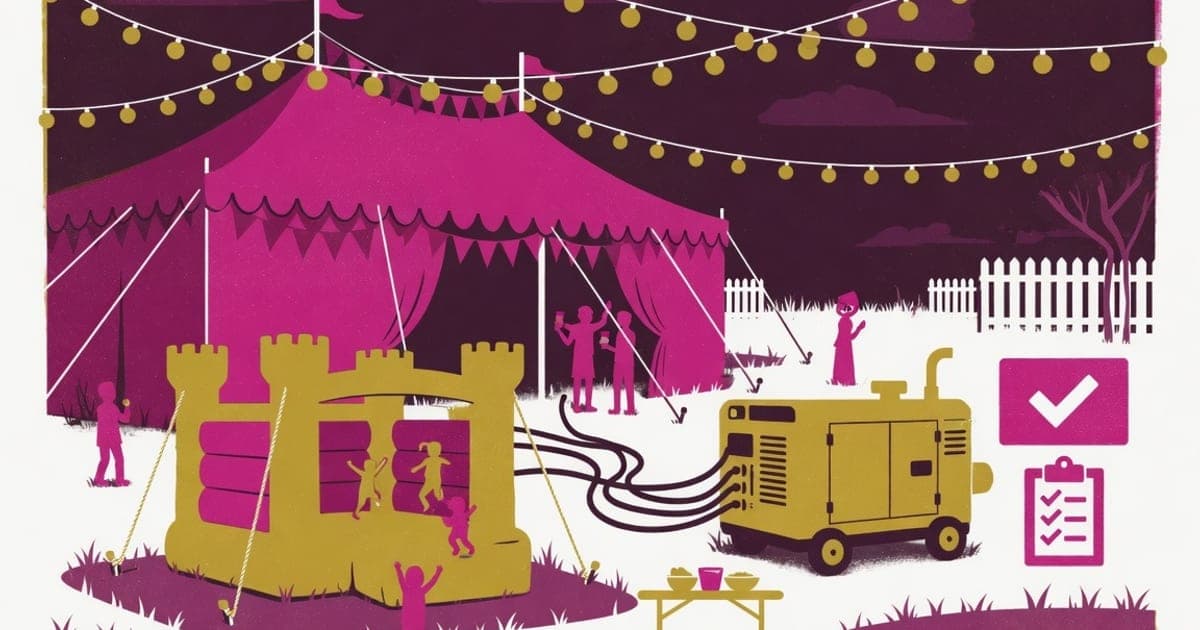
For 2026 Christmas party hire across Australia, essential safety checks centre on compliance with AS 3533.4.1 for inflatable amusement devices and mandatory inspection testing and tagging of electrical equipment after each onsite assembly and at least every six months. Event organisers and hirers must confirm proper anchoring supervision and maintenance to reduce risks with jumping castles marquees and related gear during peak festive season. These steps apply to providers and clients alike and vary by state under work health and safety laws. Checking provider details on /listings helps ensure only compliant operators are selected for events.
Compliance with AS 3533.4.1 for Inflatable Devices
Australian Standard AS 3533.4.1 sets out specific requirements for the design operation and maintenance of land borne inflatable amusement devices. This standard applies to all operators and hirers of jumping castles and similar inflatables used at Christmas parties and other events. Readers should ask providers for evidence that their equipment meets these rules including details on anchoring points and wind speed limits.
Hire companies must operate and maintain devices in line with the standard to meet work health and safety obligations. In practice this means confirming that inflatables have appropriate tie down systems and that operators follow manufacturer guidelines for inflation and deflation. Event hosts can review further details in the post on /blog/as-3533-4-1-inflatable-safety-rules to understand how these rules translate to real world party setups.
Additional guidance from WorkSafe Victoria notes that land borne inflatable amusement devices present health and safety risks when they are not properly anchored or when appropriate guarding is not in place. WorkSafe Victoria emphasises the need for ongoing verification against AS 3533.4.1 during operation at events. Providers should also maintain records of any design reviews for larger units with platform heights of three metres or more which may require formal registration under work health and safety regulations in several jurisdictions.
Electrical Inspection Testing and Tagging Obligations
Amusement devices and rides require inspection testing and tagging after each onsite assembly and at least every six months according to guidance from WorkSafe Queensland. This requirement covers electrical components on inflatables generators and lighting used at Christmas events. Competent persons must carry out the tagging and records should be available for review before the party begins.
The process helps identify faults that could lead to shocks or fires during outdoor celebrations. Hirers need to confirm that all portable electrical equipment has current tags and that residual current devices are tested as required. Additional context appears in related resources on /blog/do-i-need-a-generator-for-my-event which outline power safety alongside these tagging rules.
WorkSafe Queensland further requires that maintenance inspection and testing of amusement devices be carried out by a competent person in accordance with designer or manufacturer recommendations. WorkSafe Queensland specifies that a detailed inspection must occur at least once every twelve months. This annual check includes reviewing the operational history of the device since the previous inspection.
State by State Regulatory Variations
Work health and safety regulators in each state enforce similar but not identical rules for amusement devices at parties. In Western Australia the WorkSafe information sheet emphasises design operation and maintenance per AS 3533.4.1 with particular focus on anchoring and supervision for inflatables. WorkSafe WA provides targeted advice for small businesses on these controls. Queensland guidance highlights the six monthly tagging cycle and post assembly checks while other states reference annual inspections by competent persons.
South Australia requires regular inspections by independent competent persons and registration for certain devices. SafeWork SA mandates that annual inspections be completed by an independent competent person no later than twelve months after the last inspection. New South Wales stresses annual professional engineer inspections and electrical test and tag records with additional requirements for design registration on some equipment. Event organisers should contact their local regulator or review provider documentation to confirm which rules apply to their Christmas party location.
Annual Inspection Requirements Across Jurisdictions
Many states mandate annual detailed inspections of amusement devices by competent persons to ensure ongoing compliance. In Queensland the person with management or control must arrange a detailed inspection at least once every twelve months that covers operational history and performance testing. WorkSafe Queensland also requires major inspections under certain conditions for registered plant.
Victoria guidance outlines that employers must ensure amusement structures are inspected to the extent necessary to monitor risks under occupational health and safety regulations. WorkSafe Victoria expects inspections between hires to maintain safety. South Australia similarly insists on independent competent person involvement for annual checks with records confirming compliance to standards such as AS 3533.3 for in service inspection. Readers planning events in multiple states should verify these overlapping yet distinct obligations with each provider.
Anchoring and Physical Setup Checks
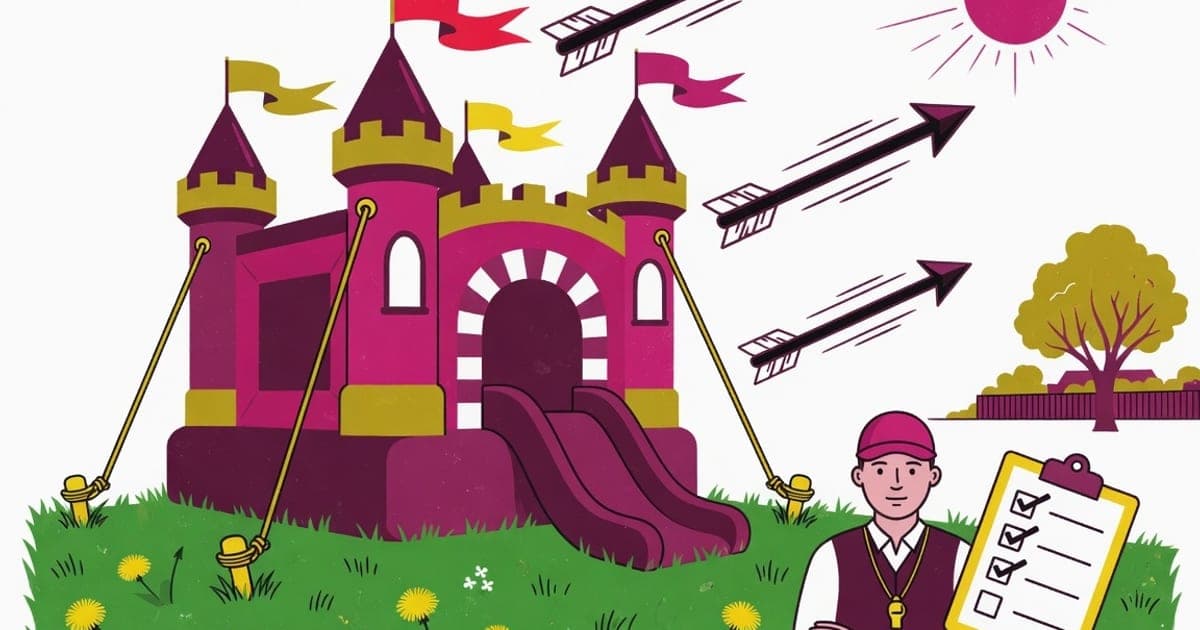
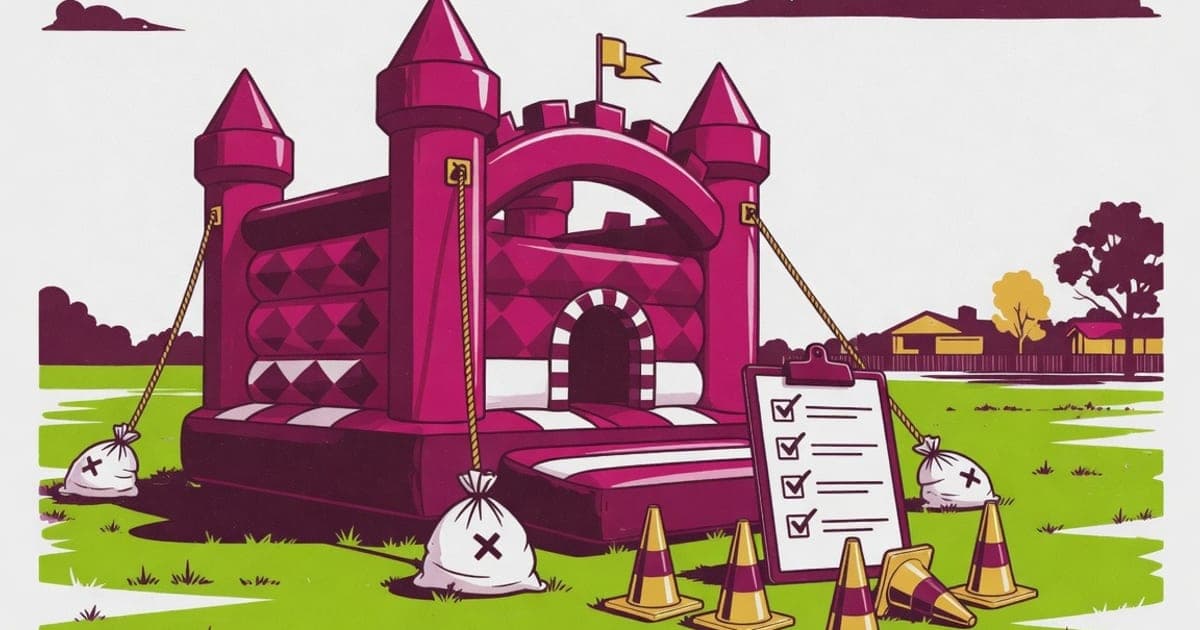
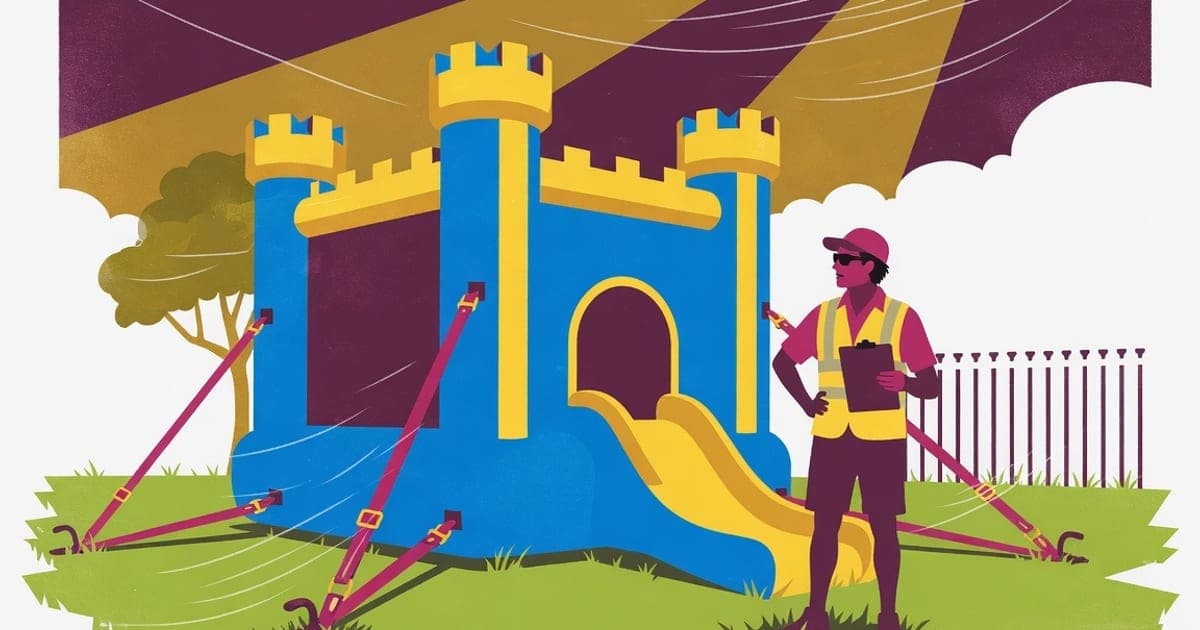
Proper anchoring forms a core part of AS 3533.4.1 compliance for inflatables at any outdoor Christmas gathering. Providers must use the specified number and type of anchors based on device size and expected wind conditions. Clients should visually inspect that all tie downs are secure and that the ground surface suits the equipment before guests arrive.
Setup also involves checking for hazards such as overhead power lines or uneven terrain that could affect stability. Operators need to follow the standard during assembly to avoid devices becoming airborne. Further practical advice is available in the /blog/jumping-castle-safety-checklist-australia post which expands on these physical verification steps for hirers.
WorkSafe Queensland has issued alerts on land borne inflatable devices becoming airborne when anchoring fails. WorkSafe Queensland reinforces the importance of adherence to AS 3533.4.1 during setup. Event hosts should request photos or videos of the anchored configuration from providers prior to the party date.
Supervision and Operational Requirements
Constant supervision by trained personnel is mandatory under AS 3533.4.1 for inflatable devices during events. This includes monitoring user numbers weight limits and behaviour to prevent overcrowding or misuse at Christmas parties. Operators must remain present and ready to stop the device if issues arise.
Training records and incident reporting procedures should form part of any hire agreement. Event hosts benefit from confirming that supervisors understand emergency deflation and first aid basics. These operational controls complement the technical standards and reduce liability for all parties involved.
New Zealand guidance aligned with the same Australian standard highlights expectations for control and supervision issues including incident registers. WorkSafe NZ notes that only operators providing evidence of AS 3533.4.1 compliance should be permitted at events. Australian hirers can apply similar scrutiny when selecting providers for festive celebrations.
Marquee and Staging Safety Considerations
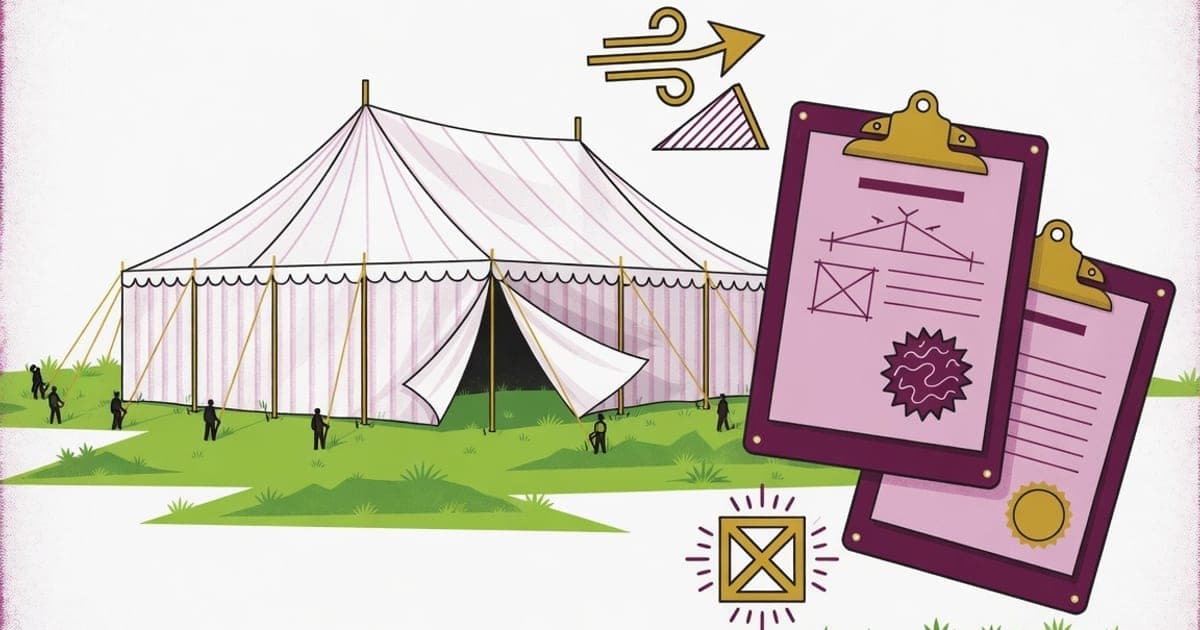
Marquees and staging used at Christmas parties require checks for structural integrity secure fixings and weather resistance. While not always classified as amusement devices they still fall under general work health and safety duties for safe installation. Providers should supply evidence of recent inspections and appropriate load ratings for furniture and decorations.
Readers planning larger setups can explore the /blog/heating-cooling-a-marquee-australia post for related environmental safety tips. Ensuring clear emergency exits and non slip flooring adds further protection during festive gatherings with high foot traffic.
What Hirers Should Request from Providers
Event organisers benefit from requesting specific documentation before confirming a Christmas party booking. This includes current test and tag certificates for all electrical items copies of recent annual inspection reports and proof of public liability insurance. Providers should also supply evidence of AS 3533.4.1 compliance such as maintenance logs or competent person sign offs.
Asking for these materials in writing helps establish a clear record of due diligence. Clients can compare responses across multiple operators listed on /listings to identify those with robust safety systems. Reputable companies respond promptly with organised files that demonstrate adherence to state requirements.
Selecting Compliant Providers Through Listings
Choosing operators listed on /listings allows clients to compare safety credentials upfront. Look for mentions of AS 3533.4.1 compliance recent test and tag certificates and state specific registrations when browsing available options. This approach helps avoid non compliant equipment that could disrupt or endanger a 2026 Christmas event.
Contacting multiple providers through the site also enables direct questions about their maintenance logs and insurance coverage. Reputable hirers welcome these enquiries and supply documentation promptly. Cross referencing with posts such as /blog/as-3533-4-1-requirements-inflatable-hirers gives additional context on what to request.
Final Preparations for Safe Festive Events
Before the party date conduct a joint walkthrough with the hire company to verify all safety elements are in place. This includes confirming tags are current anchors are tight and supervision plans are understood. Documenting these checks protects both hosts and providers under work health and safety responsibilities.
Ongoing communication with the chosen operator ensures any last minute weather changes or guest adjustments do not compromise compliance. Planning ahead with these essential checks supports enjoyable Christmas celebrations while meeting legal obligations across Australia.