Verifying Jumping Castle Anchoring Under AS 3533.4.1
5 min read
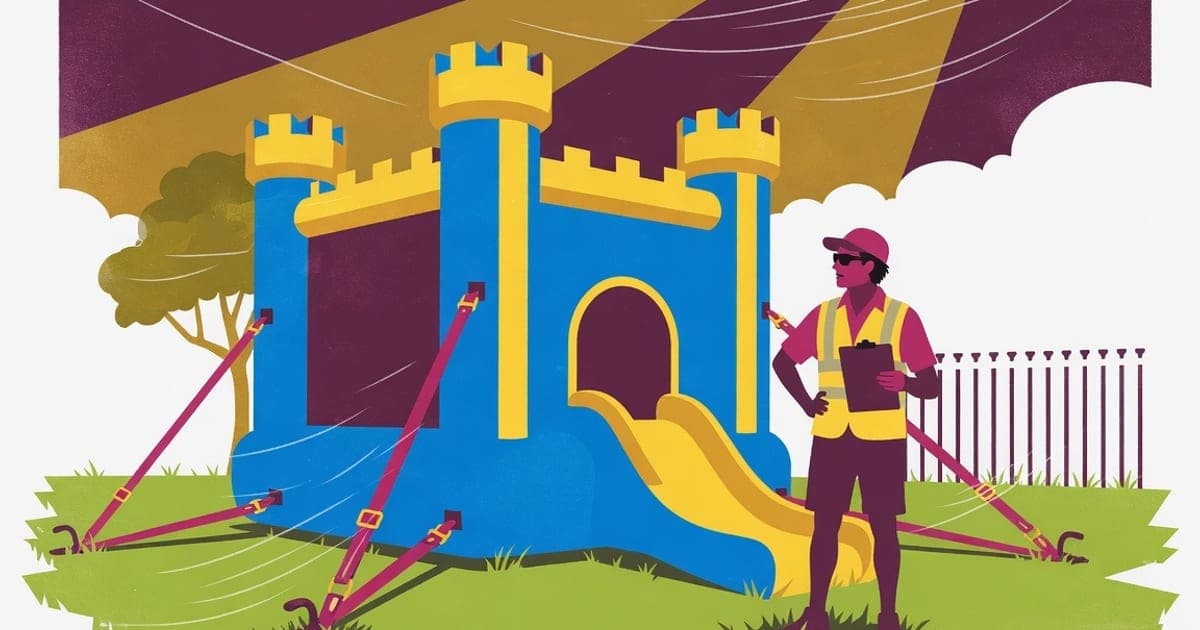
Verifying jumping castle anchoring under AS 3533.4.1 centres on confirming that land-borne inflatable devices receive secure anchoring and continuous supervision to stop them lifting off in wind. This Australian standard outlines clear duties for design, operation and inspection of such equipment. Operators and hirers must follow these rules to reduce risks at events. Guidance from regulators reinforces the need for practical checks before and during use.
What AS 3533.4.1 Specifies for Anchoring
AS 3533.4.1 sets requirements for land-borne inflatable devices to be properly anchored. The standard aims to prevent inflatables from becoming airborne when wind conditions change. Proper anchoring forms a core part of the overall safety framework for these amusement devices.
Operators must ensure anchors hold the structure firmly to the ground throughout the event. Supervision remains mandatory while the device operates so any issues receive immediate attention. These measures apply whenever the inflatable is in use at public or private gatherings.
Application Across Australian States
WorkSafe Queensland highlighted the importance of anchoring in a 2019 alert that references the standard directly. The alert stresses that inflatables must stay secured to avoid wind incidents. Similar expectations appear in other jurisdictions that adopt or reference the same Australian standard.
WorkSafe WA updated its amusement devices guide in May 2025. That guidance points to AS 3533 standards for inflatables and covers duties around design, operation and inspection. Local governments and operators in Western Australia use this document to guide compliance activities. Other states maintain comparable frameworks that align with the national standard.
State-by-State Specifics and Regulator Guidance
In Queensland the 2019 safety alert from WorkSafe Queensland details the risk of land-borne inflatable devices becoming airborne when not adequately anchored. It provides guidance specifically for owners, suppliers, hirers and those supervising operation to minimise this risk. The alert references AS 3533.4.1 as a key source of further information alongside related codes of practice.
In Western Australia the May 2025 guide from WorkSafe WA explains duties under the Work Health and Safety Act 2020 and associated regulations for amusement devices including inflatables. It covers requirements for operation, maintenance, inspection and annual checks by competent persons. Local government authorities in that state use the guide when events involve such devices.
Verification Process for Operators
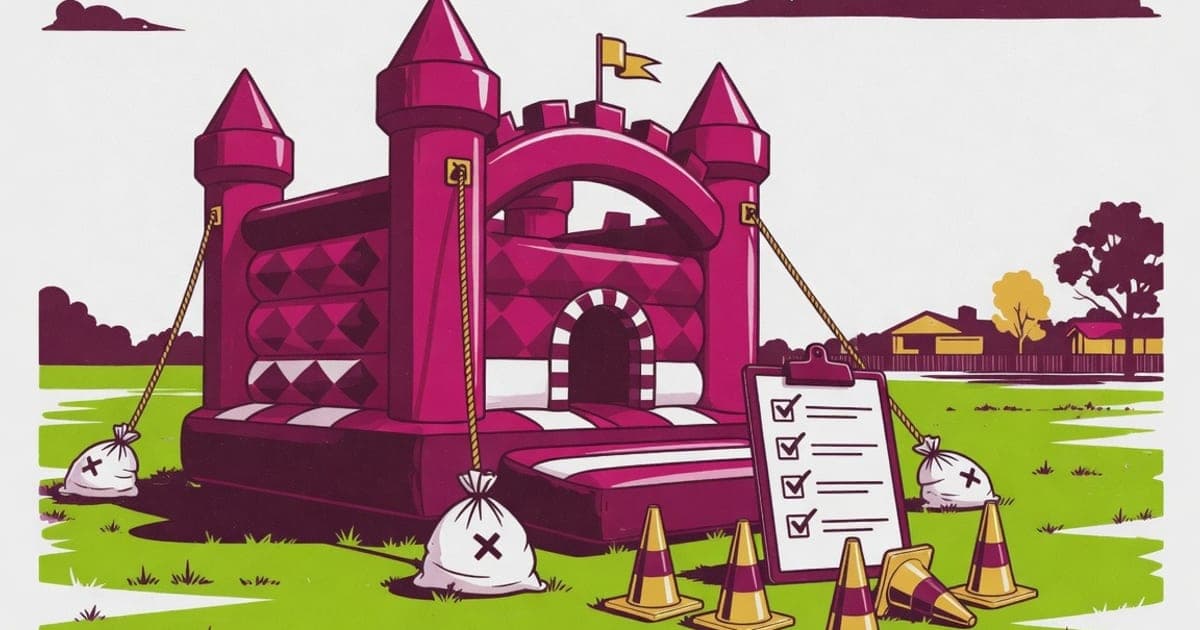
Operators begin verification by inspecting anchor points before inflation. They check that stakes, weights or tie-down systems meet the strength needed for expected wind loads. Documentation of these checks supports ongoing compliance.
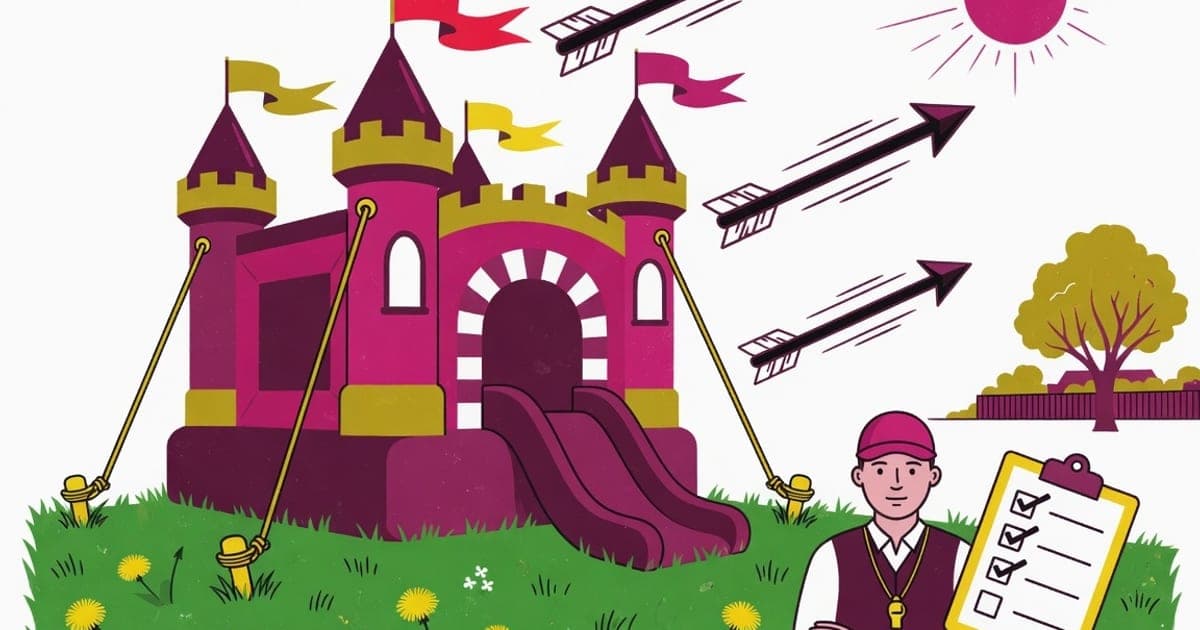
During operation, supervisors monitor wind speed and device stability at regular intervals. Any sign of movement triggers immediate shutdown and re-anchoring. Records of these observations help demonstrate adherence to the standard when authorities review an event.
What to Check on Site for Compliance
All anchor points must be secured in accordance with the manufacturer's instructions or those from a competent person. On hard surfaces where ground stakes cannot be used a competent person should design an alternative system capable of withstanding the required forces. Wind speed must stay below the device's rated maximum with on-site monitoring recommended rather than relying solely on regional forecasts.
Emergency procedures should cover responses to unexpected wind events including removal of riders and deflation of the device. Supervisors require competence through training and periodic refresher instruction. These checks align with the expectations set out in the referenced standard.
Duties of Event Hirers and Supervisors
Hirers carry responsibility for selecting compliant equipment and confirming that operators follow anchoring rules. They should request evidence of inspections and anchoring plans before the event starts. Clear communication with the supplier reduces the chance of gaps in safety coverage.
Supervisors on site must remain present while the jumping castle operates. Their role includes enforcing weight limits, watching weather conditions and stopping use if anchoring appears compromised. Training in these duties supports consistent application of the standard.
Common Mistakes and How to Address Them
Inadequate stake depth or loose tie-downs represent frequent problems identified in regulatory alerts. Operators address them by re-driving anchors or adding supplementary weights where permitted. Immediate correction prevents escalation into larger safety concerns.
Weather changes during an event can also affect anchoring effectiveness. Supervisors respond by lowering the inflatable or adding extra restraints as conditions worsen. Proactive monitoring keeps the device within safe operating parameters.
Tools and Methods for Checking Anchors
Basic verification uses visual inspection of stakes driven to the required depth and secure attachment points on the inflatable. Operators may also employ tension testing on tie-down straps to confirm they hold under load. Written checklists guide these steps and create an audit trail.
More advanced methods include consulting manufacturer specifications that align with AS 3533.4.1. Some operators use portable wind meters to record conditions during the event. Combining these approaches gives a thorough picture of anchoring performance.
Linking to Broader Amusement Device Compliance
AS 3533.4.1 forms part of a wider set of standards that cover amusement rides and devices. Operators often cross-reference it with related parts of AS 3533 when planning events. This integrated approach supports consistent safety across different equipment types.
Readers can explore further details in related resources such as as-3533-4-1-inflatable-safety-rules and as-3533-4-1-requirements-inflatable-hirers. These posts expand on inspection routines and hirer obligations. Combining the information helps build a complete compliance picture.
Practical Steps for Your Next Event
Begin by discussing anchoring expectations with the hire company when booking. Request written confirmation that the equipment meets AS 3533.4.1 and that staff will perform on-site verification. This conversation sets clear expectations from the outset.
On the day, allocate time for a joint inspection with the operator before guests arrive. Keep a simple log of checks performed and wind observations throughout the event. After the event, review the process to identify any improvements for future occasions.
Finding Compliant Providers
Platforms that list verified suppliers make it easier to locate operators familiar with the standard. Users can filter options and contact multiple providers to compare their safety practices.
Visit listings to view available jumping castle hire services in your area. Cross-checking supplier credentials against the requirements in AS 3533.4.1 supports safer event planning. Regular reference to regulator updates, such as the 2025 WorkSafe WA guide, keeps knowledge current.