AS 3533.4.1 Requirements for Inflatable Hirers
7 min read
AS 3533.4.1 establishes the specific requirements for the design, manufacture, maintenance and operation of land borne inflatable amusement devices across Australia. Hirers of jumping castles and similar inflatables must follow these rules to control hazards such as structural failure, inadequate anchorage and uncontrolled operation. WorkSafe WA guidance updated on 1 October 2025 reinforces these obligations under work health and safety legislation for small businesses and workers. The Hillcrest incident in Tasmania demonstrated the serious consequences of failing to meet anchorage and operational standards.
Understanding AS 3533.4.1
AS 3533.4.1:2018 titled Amusement rides and devices Part 4.1 Specific requirements Land borne inflatable devices sets the benchmark for inflatable equipment used at events and parties. The standard covers structural integrity stability ground suitability safety from falling access and egress as well as maximum participant numbers and blower system specifications. Hirers need to verify that every device they supply meets these criteria before any setup occurs.
Compliance begins with confirming the device carries permanent markings required by the standard including details on load limits and approved blowers. Readers should request documentation from manufacturers or suppliers that demonstrates adherence to the 2018 version or later. Failure to do so can expose hirers to regulatory action under state work health and safety laws.
The standard also addresses the need for devices to be operated only in suitable weather conditions and on appropriate surfaces. Hirers must ensure that all components including inflation systems remain functional throughout the hire period. This technical foundation supports consistent safety outcomes at parties and public events nationwide.
Who the Standard Applies To
The requirements in AS 3533.4.1 apply directly to hirers operators and event organisers who provide or manage land borne inflatable devices. This includes commercial party hire businesses schools and community groups that engage such equipment for public or private events. Self employed persons and employers share duties to identify hazards and implement controls so far as reasonably practicable.
Local government authorities often reference the standard when issuing permits or conditions of use for inflatables. Hirers operating across multiple states must check jurisdiction specific rules because enforcement and additional requirements can differ. Checking with the relevant work health and safety regulator before each booking helps avoid compliance gaps.
Employers must also ensure that any inflatable with a platform height of three metres or more undergoes formal design verification and registration as registrable plant in applicable jurisdictions. This classification triggers extra obligations around annual inspections by competent persons. Hirers who supply such larger devices need to confirm registration status with state regulators prior to use.
Anchorage and Stability Requirements
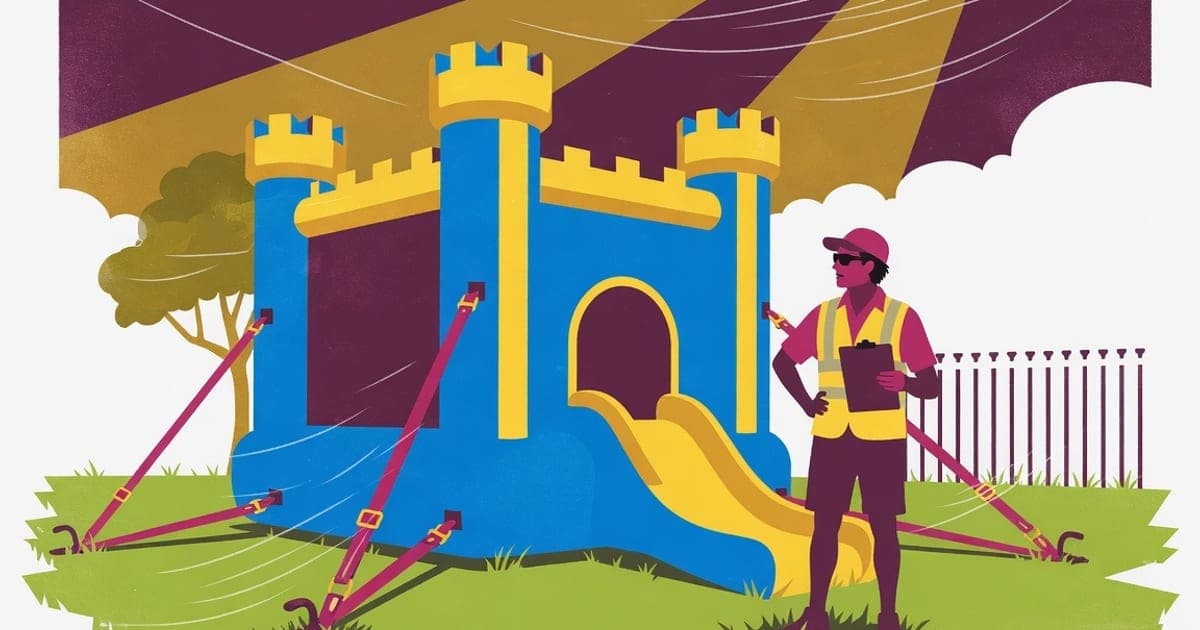
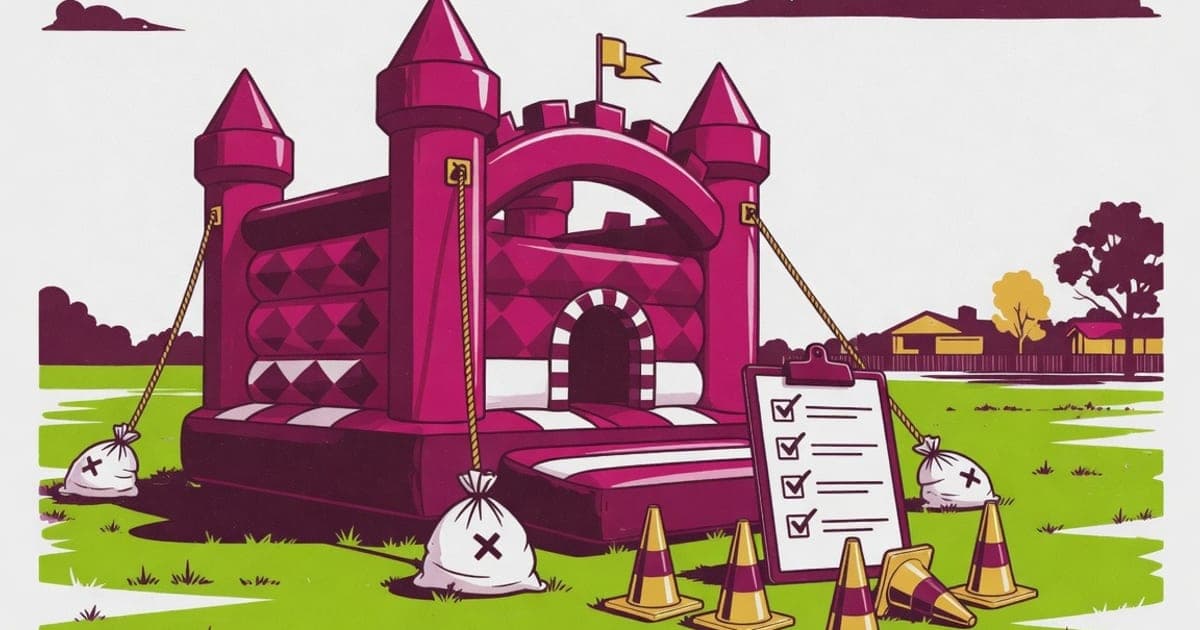
Secure anchorage forms a core element of AS 3533.4.1 with detailed specifications for ground stakes ropes straps and other components. Devices must remain stable under expected wind loads and ground conditions at the hire site. Hirers should conduct site assessments to confirm soil type and select appropriate anchoring methods that meet the standard.
The WorkSafe WA information sheet on inflatable amusement devices provides practical advice on these controls aligned with the national standard. Readers can review the full guidance on the regulator website at https://www.worksafe.wa.gov.au/publications/information-sheet-inflatable-amusement-devices. Regular checks during operation ensure anchors stay effective throughout the event.
Additional information on anchoring appears in guidance from WorkSafe Victoria which directs readers to the standard for specific methods. Proper anchorage prevents devices from becoming airborne a hazard highlighted in multiple state alerts. Hirers must document the anchoring configuration used at each site.
Operational Controls and Supervision
AS 3533.4.1 requires continuous supervision by competent personnel who monitor participant numbers weather conditions and equipment performance. Operators must enforce height and weight limits and stop use immediately if wind speeds exceed safe thresholds. Blower systems need correct installation and backup units where specified to maintain inflation.
Hirers should train staff on these operational rules and maintain records of supervision activities. The standard also addresses safe access and egress to prevent falls or overcrowding. Implementing these measures reduces the likelihood of incidents during typical party or event use.
Operators must follow manufacturer instructions in conjunction with the standard and report any incidents through established procedures. Event organisers often require evidence that devices comply before allowing operation. This includes confirmation of supervision arrangements and weather monitoring protocols.
Maintenance and Inspection Obligations
Regular maintenance and inspection are mandatory under AS 3533.4.1 to preserve structural integrity and material condition. Devices require checks for wear tears and proper function of all components including blowers and anchors before each hire. Competent persons must perform periodic inspections at intervals defined by the standard.
Hirers should keep detailed logs of all maintenance activities and retain them for regulatory review if requested. Any defects identified must be rectified before the device returns to service. This ongoing responsibility applies throughout the life of the equipment.
WorkSafe Victoria guidance specifies post assembly daily before use and annual inspections for inflatable devices. These frequencies help identify issues early and support compliance with the national standard. Hirers in other states should align their programs with equivalent regulator expectations.
Site Specific Risk Assessments
AS 3533.4.1 and supporting state guidance require hirers to complete risk assessments tailored to each hire location. Assessments must consider ground conditions surrounding obstacles wind exposure and participant demographics. Councils in Queensland for example often request site specific risk assessments as part of permit applications.
Hirers benefit from using templates or checklists that reference the standard directly. Recording the assessment outcomes provides a defensible record if questions arise later. This step integrates with broader event planning such as power requirements discussed in our post at /blog/do-i-need-a-generator-for-my-event.
Inspection Frequencies and Competent Persons
The standard and state regulations define inspection intervals and the qualifications needed for inspectors. For continuously blown inflatables with platform heights under nine metres a competent person may rely on training qualification or experience rather than formal certification in some jurisdictions. Annual inspections remain essential for registered plant.
WorkSafe WA guidance on amusement devices for local government outlines these competent person criteria in detail. Hirers must verify that their inspection providers meet the definition before relying on reports. Maintaining a schedule of post assembly daily and annual checks supports ongoing compliance.
State by State Variations
While AS 3533.4.1 provides the national technical standard work health and safety legislation in each state and territory imposes additional duties on hirers. Western Australia guidance from WorkSafe WA emphasises risk assessments and controls for small businesses using inflatables. Other jurisdictions such as Queensland and Victoria publish similar alerts referencing the same standard for anchorage and operation.
Hirers working interstate should consult the local regulator for any extra permit or notification requirements. Some councils add site specific conditions that build on the standard. Early contact with authorities prevents last minute compliance issues at events.
In Victoria employers must identify hazards associated with amusement structures so far as reasonably practicable. Queensland alerts focus on preventing devices from becoming airborne through proper anchoring. These variations mean hirers cannot assume uniform rules apply everywhere.
Lessons from the Hillcrest Incident
The Hillcrest jumping castle tragedy in Tasmania highlighted failures in anchorage and operational controls that align with gaps addressed by AS 3533.4.1. Criminal proceedings concluded in 2025 with the operator found not guilty yet a coronial review continues. The incident involved the device becoming airborne due to wind gusts resulting in multiple fatalities.
This case underscores the need for hirers to apply the standard rigorously at every setup. Proper anchoring weather monitoring and supervision remain essential regardless of jurisdiction. Readers can find further details on the legal outcomes at https://bnlaw.com.au/knowledge-hub/insights/hillcrest-jumping-castle-tragedy-work-health-and-safety-laws-in-focus-as-criminal-proceedings-wrap-up/.
Common Compliance Mistakes
Hirers sometimes overlook the need for site specific anchoring assessments or fail to stop operations when wind conditions change. Another frequent issue involves using devices without current inspection documentation or relying on unqualified personnel for supervision. These gaps can lead to regulatory notices or worse.
Reviewing the WorkSafe WA information sheet helps identify and correct such oversights before they occur. Cross checking against the full requirements of AS 3533.4.1 during setup routines reduces risk. Our jumping castle safety checklist at /blog/jumping-castle-safety-checklist-australia offers a practical starting point for daily routines.
Practical Steps for Hirers
Hirers should start by sourcing only devices certified to AS 3533.4.1 and obtaining all required documentation. Conduct thorough site inspections and prepare written risk assessments for each booking. Train all staff on supervision duties and maintain emergency procedures.
Regular internal audits help confirm ongoing compliance with the standard and state regulations. Consider linking your operations to broader safety resources such as our jumping castle safety checklist at /blog/jumping-castle-safety-checklist-australia. Documenting these steps protects both clients and the business.
Evidence of Compliance for Clients
Event organisers and councils increasingly request proof that inflatables meet AS 3533.4.1 before approving setups. This evidence typically includes manufacturer declarations inspection reports and registration details where applicable. Providing clear documentation builds trust and speeds up booking processes.
Hirers can prepare standardised compliance packs for common device types. Sharing these materials upfront demonstrates professionalism and reduces last minute queries. Listings of verified providers appear at /listings for those seeking partners who already maintain strong records.
Resources and Further Reading
Additional guidance appears on regulator websites and through Standards Australia. Hirers can explore event planning support including generator needs at /blog/do-i-need-a-generator-for-my-event and marquee climate control at /blog/heating-cooling-a-marquee-australia. Listings of compliant hire providers are available at /listings for those seeking verified operators.
The WorkSafe WA sheet remains a key reference updated as recently as October 2025. Staying current with these materials supports safe and lawful operation of inflatable devices nationwide. Further reading on related hire topics such as /blog/as-3533-4-1-inflatable-safety-rules can provide deeper context for ongoing compliance efforts.