Marquee Permits by State: What Event Hirers Must Check
5 min read
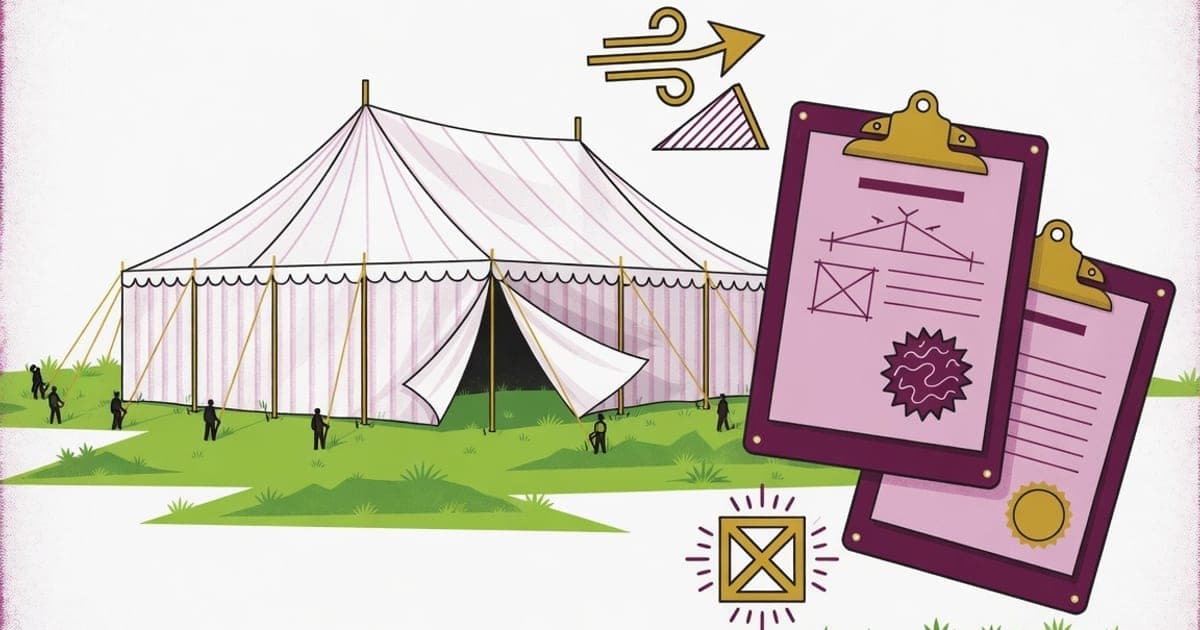
Event hirers across Australia must verify marquee permit and compliance requirements specific to their state before booking or erecting structures, as approvals fall under the National Construction Code, the ABCB Standard for Temporary Structures and varying state building regulations, with Victoria maintaining the most detailed rules for larger setups.[1][1]
National Framework Governing Marquee Use
The National Construction Code provides the overarching performance requirements for temporary structures including marquees used at events. It addresses structural safety, fire resistance, egress and access provisions that apply nationwide. States and territories adopt these rules with local variations in how permits are issued and enforced.
The ABCB Standard for Temporary Structures supplies detailed technical criteria for design, wind actions, fire safety and installation of tents, marquees and similar items. Professional hirers reference this standard when obtaining engineer certification to demonstrate compliance. Event organisers should request documentation showing the marquee meets these national benchmarks regardless of location.
Hirers benefit from understanding that while the core standards are consistent, enforcement occurs at state or local council level. This means checking with the relevant authority early avoids last minute issues that could delay or cancel an event. Many councils also require proof of public liability insurance alongside structural certifications.
Victoria's Rules for Prescribed Temporary Structures
In Victoria, tents, marquees or booths exceeding 100 square metres in floor area qualify as prescribed temporary structures under Building Regulations 2018 Regulation 207. These require an occupancy permit issued by the Building and Plumbing Commission before erection at a public event.[2]
The process involves submitting an application at least 30 business days in advance along with structural engineering certification in the approved form, typically an R126 Certificate of Compliance from a registered practitioner. Permits can cover a single event or allow statewide use for up to five years.[2]
Even marquees below the 100 square metre threshold often face additional scrutiny from councils or venues that request engineering certification and wind rating documentation. Hirers should confirm exact requirements with the Building and Plumbing Commission or local council when planning events in Victoria. Registered erectors or supervisors of temporary structures must also oversee installation for larger prescribed items.
New South Wales Council and Certification Requirements
New South Wales regulates temporary structures primarily through the Environmental Planning and Assessment Act 1979 with oversight falling to individual local councils for event approvals. Most councils mandate structural engineering certification and fire testing documentation for marquees at public gatherings.[1]
Event organisers typically apply for a council event permit that incorporates checks on temporary structures. Requirements often include evidence that the marquee complies with relevant wind load and fire safety standards from the ABCB framework. Processing times vary by council so early engagement with the specific local authority is essential.
Hirers should prepare a full certification pack including engineer sign off on design compliance with AS/NZS 1170 series standards for structural actions. Failure to provide this can result in the event permit being withheld even if other aspects of the application are complete.
Queensland Development Permit Considerations
Queensland handles temporary structures under the Building Act 1975 and Building Regulation 2021 administered by the Queensland Building and Construction Commission. Depending on size and intended public use, a Development Permit for Building Work may be required and assessed by a licensed building certifier.[1]
Event hirers need to determine whether their marquee triggers this threshold by consulting the local council or a certifier familiar with temporary structure rules. Documentation demonstrating compliance with the National Construction Code and ABCB Standard supports the application.
Smaller private events may avoid formal building approval but organisers should still verify insurance and safety obligations with the venue or council. Professional hire companies familiar with Queensland processes can supply the necessary certification packs to streamline approvals.
Approvals in Other States and Territories
Western Australia, Tasmania, the Northern Territory and the Australian Capital Territory follow the National Construction Code with additional requirements set by local councils for event approvals.[1] Common requests include engineer certification, fire testing results and wind rating documentation for marquees.
In these jurisdictions hirers should contact the relevant local government authority well in advance to confirm whether a specific permit or notification is needed. Requirements often align with public assembly or event management rules rather than a dedicated temporary structure permit scheme.
South Australia similarly emphasises council level checks alongside national standards. Across all these areas, the consistent advice is to obtain written confirmation of compliance from a qualified engineer before finalising event plans.
Steps Event Hirers Should Take Before Booking
Begin by identifying the exact state and local council where the event will occur then review the relevant building or planning authority website for temporary structure guidelines. Contact the authority directly if size thresholds or public use triggers apply.
Request detailed compliance documentation from any potential marquee hirer including engineer certificates referencing the ABCB Standard and applicable state regulations. Compare this against the specific requirements for your location.
Factor permit lead times into the overall event timeline as some processes require 30 business days or more. Consider engaging a hirer experienced in the target state to reduce administrative burden. Explore listings on partyhirenearme.com/listings to connect with compliant providers in your area.
How Professional Hirers Support Compliance
Reputable hire companies maintain current engineer certifications for their marquee ranges and understand state specific permit pathways. They can supply the full documentation pack needed for applications in Victoria or council submissions elsewhere.
When selecting a provider ask about their experience with prescribed structures in Victoria or equivalent approvals in other states. This expertise helps ensure the structure meets both safety standards and regulatory expectations.
Hirers should also confirm that installation will be supervised by appropriately registered or qualified personnel where state rules require it. This adds an extra layer of assurance for larger or public events.
Linking Permits to Broader Event Safety Planning
Permit compliance forms only one part of safe marquee use at events. Hirers should also review related safety resources such as seasonal checks outlined in the post on 2026 Christmas party hire safety checks to cover weather and operational risks.[1]
Additional considerations include anchoring systems, fire safety equipment and emergency egress routes that align with the ABCB Standard. Cross reference these with other hire items like inflatables by consulting the AS 3533.4.1 inflatable safety rules post for consistent standards across the event setup.
Thorough planning that combines permit approvals with operational safety measures reduces liability and supports successful events. Always verify the latest details directly with authorities as regulations can be updated.